
"My Short and Long Life" by Randi Schalet
My Short and Long Life
The night before my surgery, I sat on the couch studying the American Cancer Society's survival chart. All my tests suggested my cancer was in its early stages. I was more afraid of the anesthesia than the cancer, afraid I would never wake up.
Dr. E called while I was in the hospital recovering from a radical hysterectomy. They’d removed my uterus, cervix, fallopian tubes. I lay on a thin hospital mattress, the bed raised into a sitting position, a catheter inside me.
"It's not what we hoped," Dr. E said.
“What is it?”
“Stage 4.”
“Stage 4A or 4B?” I asked, my voice catching.
He hesitated. “4B. I’ll be in to see you at the end of the day.”
The lines at the bottom of the chart were grim. Stage 4B had a five-year survival rate of 17 percent. The night before it had just been a number I’d skimmed over. Now it was mine.
A close friend called soon afterwards. When I heard her voice, I started crying. “What did the doctor say?”
“It’s 4B,” I sobbed.
“What?” She couldn’t hear me. “4B!” I shouted, annoyed. “The worst diagnosis there is.”
I’d never been in denial about death. But suddenly it wasn’t theoretical. I felt like I’d been caught. I couldn’t will my body to be free of cancer, any more than I could have willed my body to get pregnant when I was trying.
I was an atheist. People asked, “but you’re spiritual, aren’t you?” I wasn’t “spiritual,” whatever that meant. I didn’t know if I had one year left or five. It depended on whether chemo and radiation would destroy the cancer cells in my pelvis.
I told my sister, my medical proxy, that I didn’t want to die alone.
“You’re being melodramatic.”
“On my deathbed, just touch me. However you can. I want to be held.”
Treatment meant six rounds of chemo, thirty-five radiation sessions and three brutal sessions of brachytherapy, when a metal device would be wedged tightly into my vagina and tied in place.
“This isn’t from the cancer,” I wrote in my cancer blog, describing how exhausted I felt. “It’s from the treatment.”
I’d always thought I’d be someone who wouldn’t fight death. Instead, I found myself researching private cancer centers offering red light therapy and hyperbaric chambers. The reviews weren’t good, mostly written by husbands whose wives had recently died.
By the fourth round of chemo, I could barely walk to the patient parking lot. I asked my medical oncologist if I really needed to complete all six sessions. Were the outcomes after four sessions all that different from six? I was a bargainer, always trying to get away with less.
“We want you to finish all six,” she said.
“Could you lower the dose a little?”
She lowered it by twenty percent. The last two sessions were easier, but then I started to obsess about the decision. What if the full dose would have made the difference between life and death?
I asked the nurse administering the drug whether we could go back to the original dose.
She shook her head. “It’s already set up.”
Radiation was next: five days a week for seven weeks. I lay in the cast of my body on a metal table, staring at a light box showing wildflowers and daisies, trying to slow my breathing.
Radiation left me with stomach pain and diarrhea. A student nutritionist told me to eat white rice and white bread. As if that was a novel idea. Now I had to figure out how to live like a sick person.
Was it time to retire? Did I have enough money? How long would the money need to last? What if a new lifesaving drug came out that wasn’t covered by insurance?
I ended work with half my clients. There were many tearful sessions. The other half I kept seeing on video. They didn’t seem to notice my fatigue or that I was wearing a wig, or at least they didn’t say anything. Working half time seemed like the right decision. I was good at what I did. I still needed the validation and the distraction.
There were things more difficult to contemplate than cancer. After my son died of an overdose, I couldn’t bear to think about him. For years, I avoided photos. I didn’t want to hear his voice on the videos my daughter sent. A gay Black man in an HIV commercial reminded me of him. The confident way he walked, the way he understood how attractive he was. He was holding hands with his lover and laughing. When this commercial came on, the pain made me clutch my stomach and moan out loud.
I learned to jump away from my feelings. I knew this wasn’t helping me come to terms with anything. I would have told my clients to do just the opposite. “When you push away bad feelings, they only come back stronger.” But I’d said those inane things before my son died, before I understood grief.
He was gone but I desperately wanted to stay alive.
After treatment, I had to wait three months before the next scan. I pictured hearing bad news, the sad expression on everyone’s face. I tried to prepare myself for the worst. The good news stunned me. There was “no evidence of disease.” I read the report over and over. Was it really that simple? I copied and pasted it into ChatGPT to make sure I hadn’t missed anything.
No one knew how long this remission would last. It could be three months, it could be forever. At first, the medical oncologist told me there was a seventy percent chance the cancer would return. Eventually she gave me a fifty percent chance of long-term remission. How was I supposed to live when death wasn’t in front of me but a long life didn’t stretch ahead either?
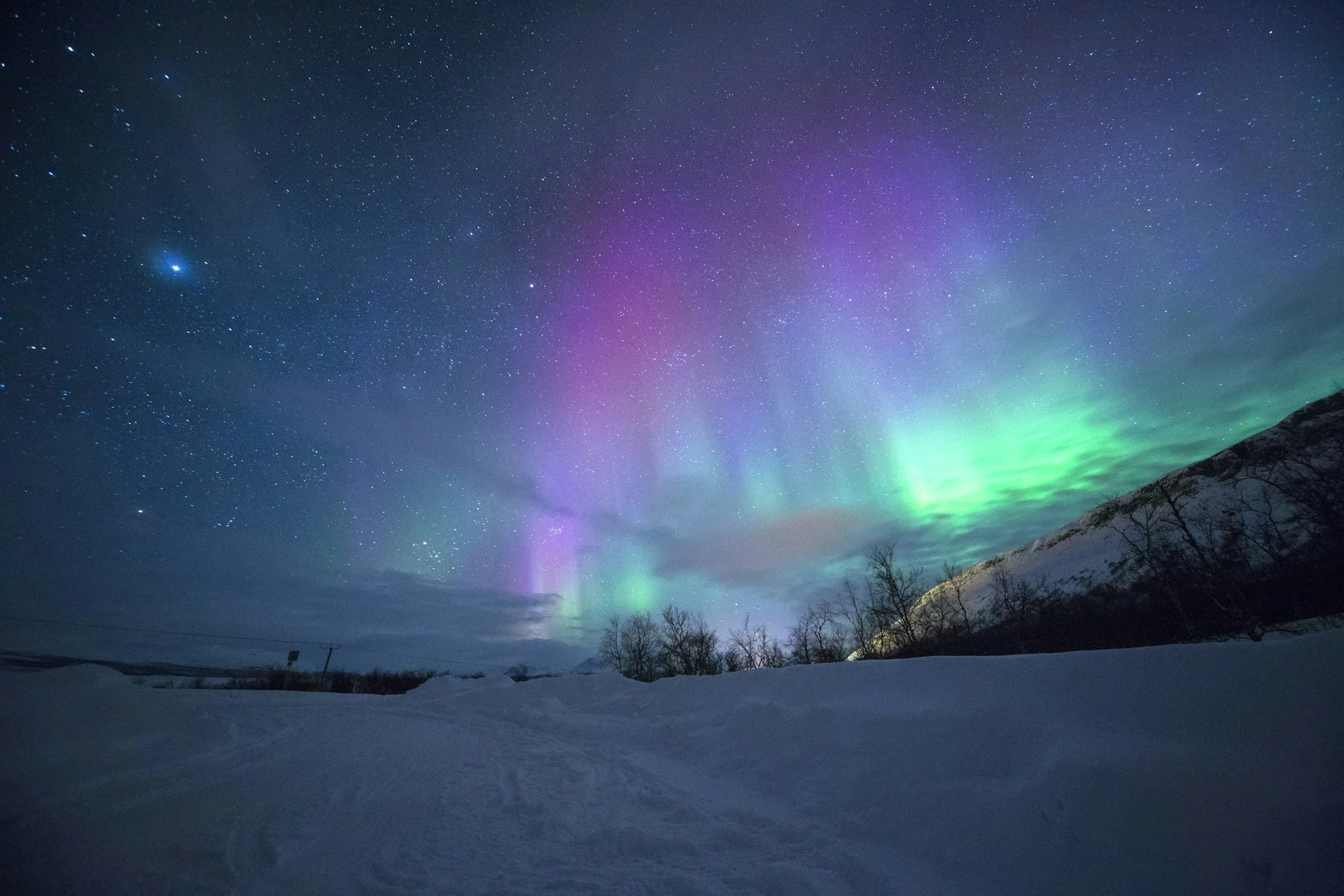
I decided to take a vacation every two months: remote hot springs, the Yukon to see the Northern Lights. My sisters came along, indulging my desire not to miss anything. I went to Boston for a month to see my old friends. I swam across Walden Pond, the little orange floaty tied around my waist bobbing behind me.
Then suddenly, two years into remission, the cancer appeared in my lungs. I heard the news while I was driving home in traffic, with a friend beside me. I pulled into a fast food parking lot and started crying. I’d also been driving when I’d heard about my son’s death.
“I don’t know what to say,” my friend said.
“Say something comforting. Something like, ‘You’re a strong person, Randi. You can deal with this.’”
I wanted her to drive the rest of the way but her eyesight wasn’t good.
It was called a distant metastasis, a separate line on the survival charts with much worse odds.
I had lung surgery to cut out the cancer. The pulmonary surgeon was hopeful. But by the next scan, it had spread to the other lobes. The painful surgery—including a drainage tube that had to be yanked out of my side—had been useless.
I added to my nighttime regimen for sleep: a gummy, Trazodone, masturbation. I dreaded getting into bed and the thoughts that would come.
“I don’t want to die.” I sounded like a two-year-old.
“It won’t be this year,” Dr. E, my oncologist, reassured me. There were treatments we hadn’t tried yet.
“Please do everything,” I said. “I really don’t want to die. I’m not ready.”
Every decision, every minute seemed important. Should I stay in my pajamas and watch TV or take a cooking class at the senior center? Should I spend time with an old friend I didn’t really like? I’d sometimes told my clients, don’t throw anyone off the bus. But now I wanted to. Lots of people were annoying me.
Work felt impossible. I couldn’t concentrate. I said good-bye to clients I’d seen for twenty years, a more abrupt ending than they deserved. “You have every right to retire,” they assured me. “Are you going to travel?”
I was sixty-four.
A treatment called the Ruby protocol had just finished clinical trials and was now the standard of care. It had been shown to help people with my kind of cancer live longer—six sessions of the same chemo I’d had along with indefinite immunotherapy and its own scary side effects.
Dr. E suggested hormone treatment instead. Eight pills a day for my progesterone-positive cancer. The side effects were weight gain, fatigue, a moon-shaped face. Avoiding chemo would be amazing. But was a hormone treatment powerful enough? I’d suffered during chemo, but it had kept the cancer at bay for two years.
“Are you sure?” I asked Dr. E.
“Let’s try it.”
My future keeps rearranging itself. When it seemed shortest, I set up a revocable trust. I wrote my will. I sold my co-op so my daughter wouldn’t have that task. I rushed to finish writing a book of poems about my son.
The cancer had been spreading into my lungs at a frightening pace. But two weeks after I started hormone treatment, my CA-125 blood test dropped to its lowest level ever. A couple of months later, another CT scan showed “no evidence of disease.” It’s been fourteen months and every scan since then has been clear. Tumors had spread to every lobe of my lungs. Now they’re gone.
If I get out of breath while walking, I convince myself it’s a recurrence. Then I look for explanations: the twenty-five pounds I’ve gained, the slight incline on the street. The smallest spot of blood after using the bathroom sends me into a panic. It’s nothing, I tell myself and leave my house to have lunch with a friend. We share stories about our entitled children, and suddenly I believe I’ll be the outlier who doesn’t die from metastatic uterine cancer. I research modular kayaks that can fit in the back seat of my car and imagine the lovely rides around the bay I’ll take.
When people ask how I’m doing and I tell them about the clear CT scans, I can see them relax. Part of me wants to say, “Not so fast.” They hear good news. I hear a reprieve.
When I was diagnosed, living for five years sounded unbearably short. Now, after four years of cancer, five years would still be too soon. But it no longer feels like racing toward the end. Five years feels like a future.
People like to remind me that none of us knows when we’ll die. But living with an incurable disease is different. Most people don’t spend their afternoons reading cancer research or looking at the newest survival curves.
I asked Dr. E how long this hormonal treatment would work.
He wouldn’t say.
“Months? Decades?”
“Years,” he finally said.
I felt happy that years was plural. But no matter how I pressed him, he wouldn’t say more. “Only God knows,” he said.
God is the last authority figure I’d trust. Dr. E isn’t the problem. Uncertainty is.
I don’t jump away from the frightening thoughts anymore. When I’m afraid of dying or overwhelmed with missing my son, I try to just stay there. I used to think the pain would become unbearable if I didn’t escape it. But it doesn’t. It gets very bad, and then it gets less bad. I can bear it.
I’m in remission again. The next CT could change everything. But I go ahead and book expensive plane tickets, fill my freezer with my favorite foods, invite friends for dinner, and buy tickets to a concert almost a year away. I don’t know what will happen. I make plans anyway.
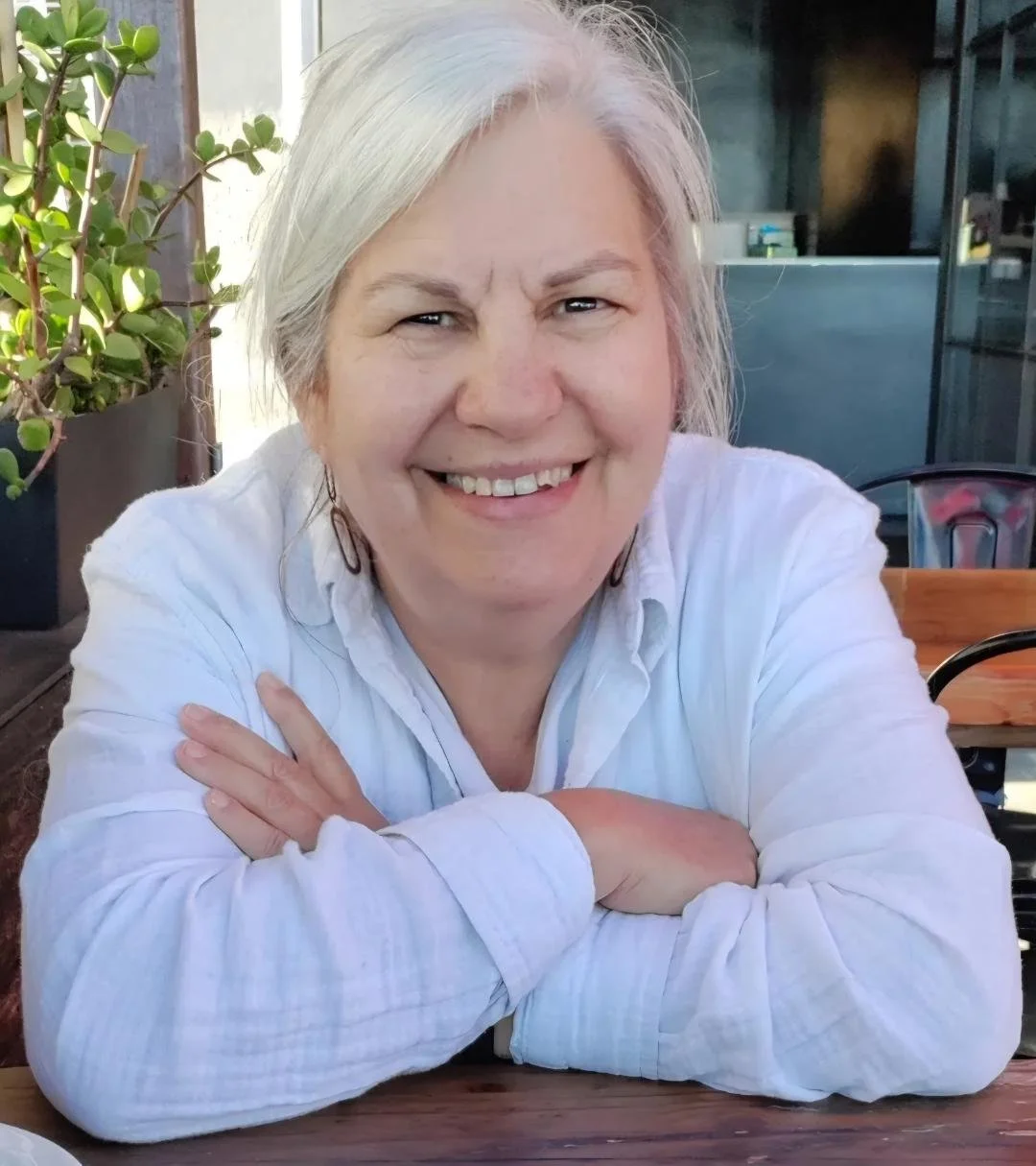
Randi Schalet is a retired psychologist living in Berkeley, California. She is the author of two novels, Lunch and Dessert, and the poetry collection The Last Things I’ll Remember (Finishing Line Press). Her essays have appeared in Under the Sun, Rumen, Peauxdunque Review, Chicago Story South, and other literary journals. She was a finalist for the 2025 Wolfson Literary Award.