
2026 Nonfiction Winner: "Once a Veteran, Always a Hero" by Natalie Neil
Once a Veteran, Always a Hero
It was November 11, 2019. I was walking down the aisle of the Professional Arts Center. The room was dark, except for the fluorescent lights above the stage, which bounced off the shiny brass instruments of the high school band —a group of awkward teenagers sitting in cheap plastic chairs, nervously licking their reeds, and shakily fingering along to the music in front of them. Old men and their spouses filled the seats surrounding us, their hats so well-worn that they were pressed flat against the top of their bald heads, paired with the colorful shine of medals etched with the words "Marines," "Navy," "Army," and "Air Force," representing the honor they fully deserved.
With my flimsy black flats rubbing the backs of my feet, and my skinny jeans too long for my awkward middle school figure, I followed Mrs. Scotten, my eighth-grade English teacher, to the third row from the front. We sat down in the scratchy folding seats, with Shelby, the second-place poetry winner, to my right, and Abby, the third-place recipient, to my left. The two girls looked bored, and immediately their noses dived deep into their Instagram accounts, searching the endless sea of opinion for something more exciting. Henry, the only boy and the alternate of our group, quietly sat at the end of the row, his wrinkled blue button-down and high waters covering the slouched body of a boy who didn’t understand how he ended up next to a bunch of high-strung girls at a poetry reading. I didn’t know these kids well; they didn’t care about school as I did, and instead, focused on sports. I, on the other hand, was one of the shyest students in the 8th grade. I got straight A’s, I was favored by all of my teachers, and I avoided public speaking like the plague. I still couldn’t believe that I had won this thing. Every 8th grader was required to write a poem about Veterans Day, and then, when everyone finished, each class would anonymously vote for their favorite. The top three poems would be read aloud at the annual Veterans Day assembly. And guess what? I was the favorite. I remember the night my mom got the email from Mrs. Scotten, saying that I had won. I was sitting at the kitchen counter with tears in my eyes, begging her to tell Mrs. Scotten that I didn’t want to read my poem at the assembly. I was too shy. However, my mom said that speaking would be good for me, and if I really didn’t want to do it, I would have to tell Mrs. Scotten myself, something she knew I would never have the courage to do. So, two weeks later, here I was. Nervous and shaking with a stomach full of knots.
I observed the man in front of us, dressed in a deep blue uniform with its large brass buttons and medals lined up in a neat row across his chest. He sat with obvious importance, rigidly straight, his forearms bulging out of his jacket like Popeye's, and a look of seriousness on his face; his eyes seemed glued to the front of the room, unmoving. Mrs. Scotten noticed me watching him and smiled her big, bright grin, her pink, powdered cheeks about to bulge with excitement.
“This is Sergeant Quinlan. He’s going to be our guest speaker this morning. Isn’t that great?!”
Sergeant Quinlan’s stern face looked back at me, and in a low, rumbling voice from deep in his chest, he said, “I’ve heard a lot about your poem, young lady. I’m sure ready to hear it.”
“Umm…yeah. I hope you like it. Thanks.”
Gulp. My mind began to reel. I have to speak in front of him? I’m going to mess this thing up so bad. All of a sudden, my palms grew sweaty, my knee was bobbing like a jackhammer, matching the beat of my heart, pounding into the stained carpet floors. I am way too shy for this, I thought. Maybe I should tell Mrs. Scotten I don’t feel good. No, I can’t do that. Don’t be a baby. Ding. Ding. Ding. Oh no.
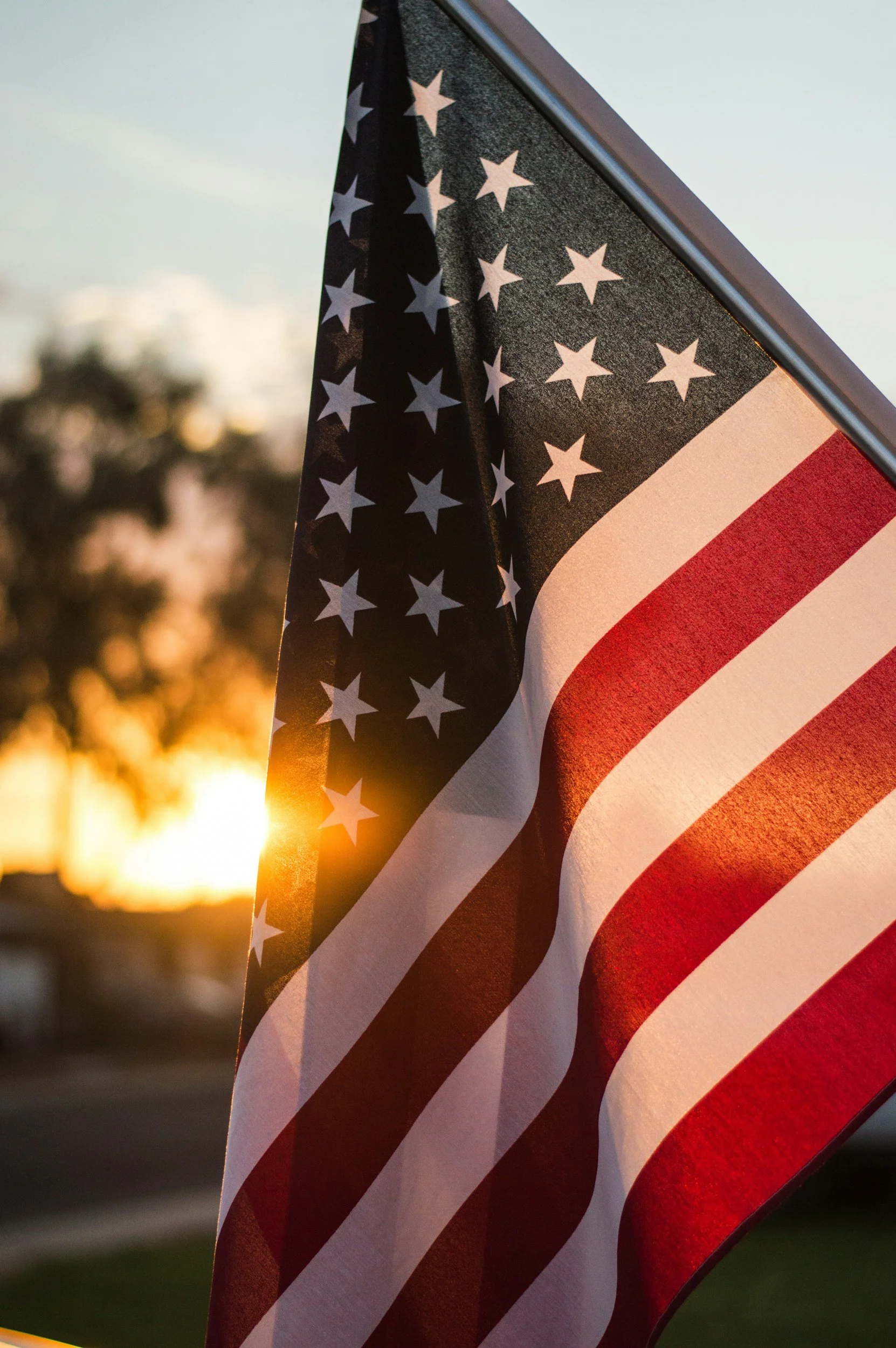
The sound of the bell vibrated through the speakers above my head. The assembly had started. The band began playing a slow, resounding melody, and like the brakes of my Mother’s car, there was the sudden squeak of a clarinet making its appearance on each crescendo. A video was projected onto the wall of the stage, with the U.S. flag of red and white flying across the screen, and a message exclaiming a largely lettered Thank you, Veterans!! As the video ended, the music quieted down, and the crowd grew silent. All you could hear was the clinking of the instruments up front and the muffled coughs from the Veterans scattered across the room.
“Halt!”
We heard the loud grunt of the teenager behind us, his voice cracking with the effort. Everyone turned to look over their shoulder as the American flag made its way toward center stage.
“Left!”
The boy held the flag high above him, and three JROTC members moved behind him in unison through the aisles of the auditorium. Their clunky boots created a thumping echo throughout the room, their rifles rigidly placed between their fingers, and like puppets on a string, they stiffly marched their way toward the front of the room. Everyone stood.
“Face!”
I put my hand over my heart.
“Arms!”
With their lips pursed and cheeks full of air, the band raised their instruments, and Principal Minor, his massive form looming over the podium, said, “Ladies and gentlemen, please rise for the Presentation of Colors, and remain standing for the playing of the National Anthem.”
The Anthem played as hundreds of people stood with their right hand over their hearts, some singing quietly to the familiar tune. The song came to a close, and Mr. Minor returned.
“You may be seated.”
Like a well-oiled machine, everyone sat at once, and a mass of bodies attempted to get cozied back into their seats. Mrs. Scotten remained standing and walked up to the stage, full of grace with her long strides and flowing cardigan. She stood behind the podium with her rich brown curls perfectly framing her face, and her bright blue eyes crinkled in the corners. She then looked at us, her students, and then, in her singsongy voice, she said, “Every year we have a poetry writing contest for the eighth-grade English classes. Each poem is written to honor our Veterans and is voted on anonymously by their classmates…”
I can’t do this. I can’t do this. I can’t do this. My heart was beating so hard it sounded like a drum thumping right inside my ear. I came back to reality and tried to focus.
“Alright, we are going to go ahead and have our third-place winner come up here first. Abby, hon, let’s hear it!”
Abby, with an annoyed scowl on her round, chubby face, put down her phone and grabbed her poem. She walked up the stairs to the stage and took Mrs. Scotten’s place behind the podium. She said her poem quickly, with only a slight shake of the voice, then went and sat back down in the seat next to me. Shelby went next, and then, before I could even think, I heard Mrs. Scotten.
“And now, for our first-place winner. Ms. Neil!”
From under my feet, I grabbed my thin piece of printer paper with my poem written on it and slowly made my way to the steps. From the corner of my eye, I could see Henry, Abby, and Shelby, their faces finally away from their screens, anxiously awaiting the silent kid to speak.
They don’t think I can do this, do they? Well, let me prove them wrong. I focused on the paper between my fingers. Being on the floor, the poem had suffered through the battle of my bobbing knee, its crinkled edges and ripped chunks making it look like I had just dug it out of a trash can. I clenched it tightly and made it to the stand. I looked out across the crowd and, thinking to myself, I said, This is only two minutes of your life. You can do this. I took a deep, shaky breath and brought the microphone closer to me. As I stood on my tiptoes and hugged the podium for support, I looked down at my crumpled poem with its misspelled title of “Once A Vetran Always a Hero”, and with my mouth dry and hands shaking like a leaf, I pushed up my glasses and began to read.
“His skin weathered like the beaches of Normandy
His eyes as grey as the smoke filled sky
His hands scarred from long days in battle
His smile faint yet filled with pride
His heart full of passion and love for his country”…
I continued reading the next few stanzas, and the crowd was completely silent except for the photographer in the front row, clicking his camera. I caught a glimpse of Mrs. Scotten, her smile so full of pride it formed a perfect crescent, as if it were the moon itself.
The subtle nods of the head and listening ears among the crowd gave me a sense of calm, making me wonder why I was so scared to do this in the first place, and as I went on, my voice grew more confident and my pauses more dramatic. This isn’t so bad at all. I’m pretty good at this, I thought. I made it to the final stanza, my voice full of strength, passion, and pride.
“I’ve held my hand over my heart
I’ve seen Veterans both young and old
I’ve heard stories of the brave and bold
I’ve prayed for those risking their lives
I’ve shot fireworks that burst in the sky
He was a Hero
We thank you for your service.”
I finished my last line and looked up from my poem with a shy smile.
“Thank you.”
All at once, classmates, veterans, and teachers burst with wild applause, and I quickly wiped my sweaty hands on my jeans before I grabbed my poem and made my way off the stage. I was so relieved that I was done. I blew out a deep breath and collapsed back into my chair next to Abby and Shelby, who looked at me curiously, like they really couldn’t believe that I had just done that. But I did. I smiled to myself, silently giddy at their disbelief. Then, just when I thought the celebration was over, Mrs. Scotten hurried over and squeezed me so hard my feet came off the ground.
“I am so, so proud of you, dear! I’m going to be honest, I didn’t know if you would do it or not, but you did amazing! You have a gift for speaking, girl!”
“Thanks, I was super nervous!”
We sat back down, and I relaxed back into my seat, a grin still plastered on my face. I was shaking from the adrenaline, but I was glad to be done and enjoy the rest of the assembly without my nerves getting in the way. Now that I could actually focus on the moment, I was suddenly aware of how beautiful the assembly felt like live—the music, the lighting, the men in uniform. Usually, only the high school students got to watch it in person because there wasn’t enough room for those of us in the lower grades. I recall the year before, when I sat in a classroom full of 7th graders, watching the assembly on an old, flimsy smartboard that had worse sound quality than my Grandma’s VHS tapes. Now, even though I was only one year older, I was there, with the adults, when everyone else was stuck in their stuffy classroom, and I felt grown up. You should be proud, I thought. You just read a piece of your work in front of the entire town. Suddenly, I was overwhelmed with a new burst of confidence, and I felt myself sit a little bit straighter in my seat.
As I looked ahead toward the stage, I noticed Sergeant Quinlan. He had taken his navy cap off, exposing his closely cropped hair. His head was slightly bent down toward his feet, and his hand was wiping his eyes. As if he could feel my quiet glance on the back of his jacket, he turned to face me, and with his red cheeks glistening and his eyes wet with tears, he looked me in the eye, and he smiled.
“Nice work, young lady.”
“Thank you, sir.”
He turned back around, and I leaned back in my seat with a small smile on my lips as if I now had a secret only between him and me, and I felt the love in the room for all of the people who risked their lives. I was never prouder of myself than in that moment. Not only had I written a really good poem, but I had broken out of my introverted shell, walked up to that stage, and read those words with a boldness that shocked every person in that room. Most of the audience had never even heard me say a full sentence before, but on that stage, I felt like a new person. Braver, older. And honestly, I just couldn’t believe I made the Sergeant cry.
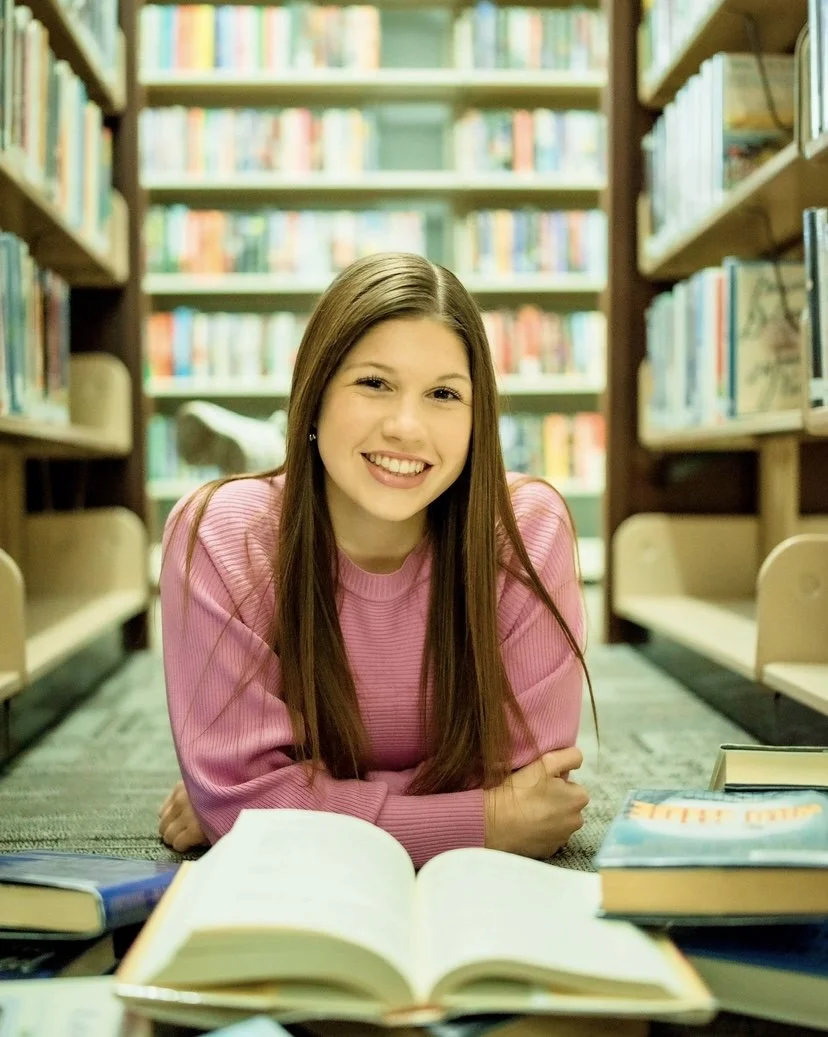
Natalie is currently a Junior at K-State studying English Education with Minors in Literature Studies and Adolescent Literature. Coming from a small town in Nevada, Missouri, Natalie loves showing cattle, working with plants, hiking, and most of all reading and baking. This is now her second publishing in the Touchstone Literary Magazine, and she looks forward to seeing where her newfound love for creative nonfiction takes her!