
"Smudge & Rime" by Ashley Mangtani
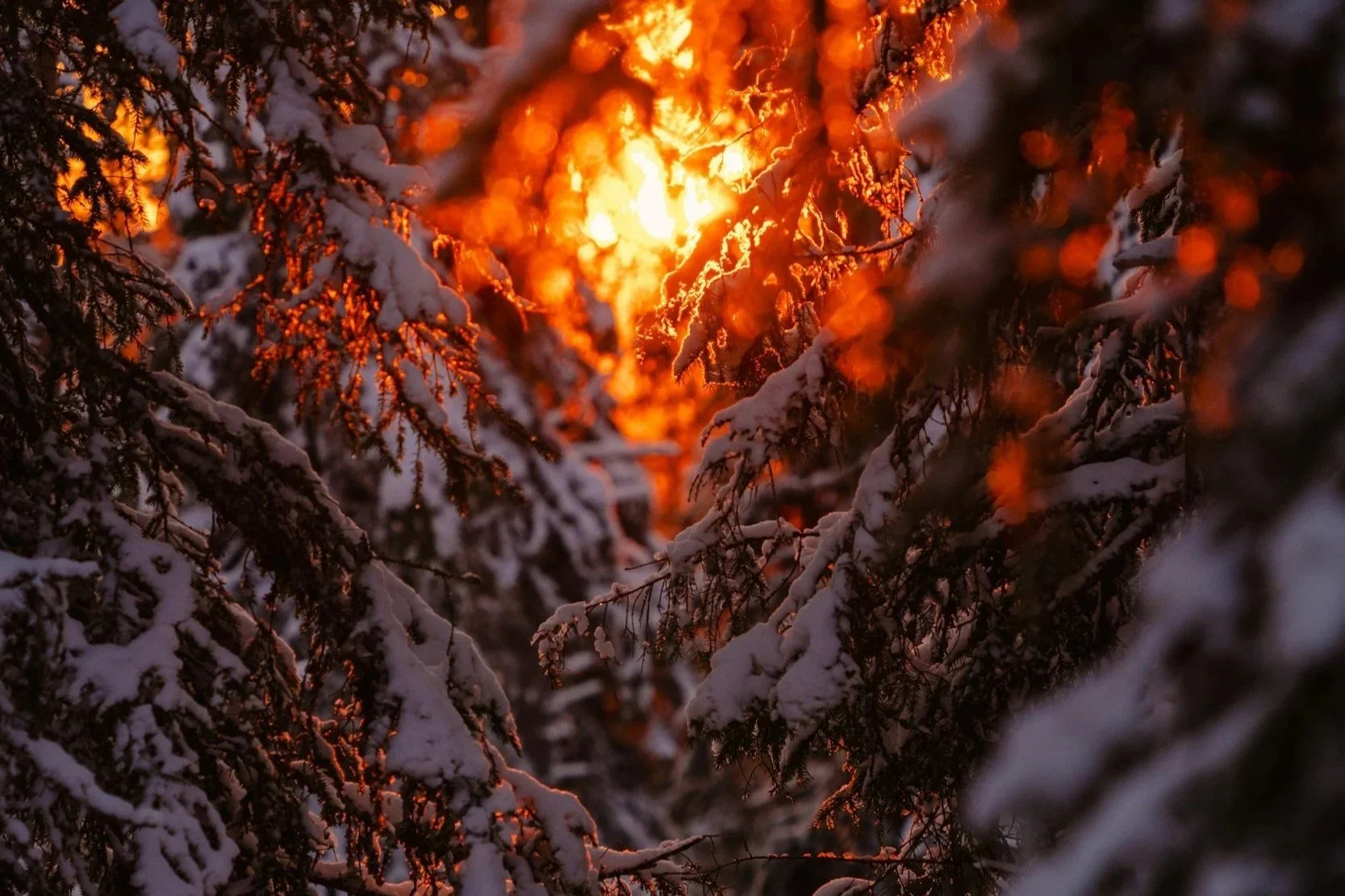
Smudge & Rime
The Forest With No Name
Past the last road, where the mapmakers lose their nerve and leave the paper blank, a forest grows that nobody ever bothered to name. It manages without, and its beeches cling to their copper leaves until spring pries them loose. Its stream quarrels with its own stones from moonrise to moonset and on the north side of the trunks, the moss lies deep enough to swallow a dropped acorn and never give it back.
What follows concerns that forest, a winter, and an owl and a dik-dik who belonged to each other for their whole lives. I should warn you that it is a tale for grown-ups. There’s hunger in it, blood on the snow, a lynx with a cough, and a pair of young males who lay down together and snuggle among tree roots. If you were hoping for something gentler, shut the book and go and warm your hands on a mug of cocoa.
For the brave among you, come in under the ancient beeches, mind the brambles and keep your voice low, for the owl is listening.
The Blackthorn Shuts Its Door
Smudge was a dik-dik, and if you have yet to meet one, picture an antelope somebody put through a hot wash by mistake. He stood no taller than a hare sitting up on its haunches, on limbs so slender that herons envied him, and every hoof left a print the size of a thumbnail. His eyes were huge, rimmed in white. At the inner corner of each eye sat a sooty slit of a gland that wept black resin. Below them wriggled his nose, which stretched and pumped the air in and out in bellows no bigger than a fig. A russet tuft crowned his head and sprang upright at any alarm, and to Smudge a falling leaf qualified, so that little flag spent most of its life on end.
What a dik-dik was doing in a northern wood, I cannot tell you, and Smudge could not have told you either. His mother dropped him in a blackthorn thicket, as her own dam had borne her, and none of them thought the arrangement peculiar. All summer he nibbled the sweetest buds on offer, dozed in dappled shade, and believed the world was made of thorn. Then the leaves started to fall, and his father began to stare at him.
Dik-dik fathers do this. It’s not uncommon. The habit climbs with the autumn sap, and on a raw morning a buck looks at his growing son and smells a rival. So Smudge's father lowered the stubby ridged horns he kept tucked inside his crest, and drove Smudge out. He chased him past the bramble, the badger's spoil heap and the bend where the stream ducks under a fallen oak. Whenever Smudge tried to circle home, those prongs met him, and in the end he gave up trying.
His mother waited among the sloes with her ears swivelled his way, and didn’t follow. That, too, is what dik-dik mothers do. So Smudge washed up alone at the base of a glade, with the birches flinging their last yellow coins at him and his tuft bolt upright. He was hungry, cold and had no thicket to his name. Then, for want of a better idea, he did what his body had been saving for this very hour. He chose a bare hazel twig at eye height, and pressed the slit against it. It left a smear there, tacky and rich with his smell.
It was the most grown-up deed of his life so far, and his knees knocked throughout. If you are wondering about his name, look at the twig.
“I should warn you that it is a tale for grown-ups. There’s hunger in it, blood on the snow, a lynx with a cough, and a pair of young males who lay down together and snuggle among tree roots. If you were hoping for something gentler, shut the book and go and warm your hands on a mug of cocoa.”
Rime Learns to Listen
Rime was a barn owl, which is to say he was a face with a bird attached. That face was a heart of pale silk with jet seeds sunk into it for eyes, and it was no ornament. It was a dish that gathered every crackle, tick and scurry in the dark and funneled them inward to his ears, which didn’t even sit level, so that a squeak reached the higher ear a hair ahead of the lower and told him how far down the squeaker crouched. His back was sapphire blue, stippled with white spots that resembled fresh milk. His flight feathers finished in a soft fringe along their leading edges, which hushed the air as he flew.
He hatched in the hollow of a lightning-split lime, alongside a brother and a sister who were larger and louder, and all summer the old birds had stuffed that nest with voles and shrews and, on a red-letter evening, a young rat almost his own size. Then, around the time the beeches turned, the deliveries stopped.
Owl parents are not cruel. They are only certain. Rime sat in the doorway of the lime and hissed for his supper, and then louder. His mother perched above him with her face turned away, until the message travelled in through that great dish and settled in his stomach. The world would not feed him any longer. He must listen to it instead.
So that’s what he did. He took a post at the edge of the same glade where Smudge had marked his twig, tipped his head this way and that and missed vole after vole. He struck grass and came up clutching grass. He struck a beetle and swallowed it to save face. He went to roost on a grey morning, his belly so slack it met his back. Then a frost stiffened the meadow stalks, so that the voles running underneath set them rattling. Rime caught the rattle. His talons closed, and a warm weight lay still between him.
He bolted it down head first, the way his parents had always fed him. Near dawn he coughed up a tidy pellet of fur and bone, and left it on the post for the entire neighbourhood to admire.
A Shadow Without a Sound
The snow arrived under the hunter's moon. It drifted down in unhurried flakes that took their time choosing where to settle, and by morning it rubbed the glade out and drew it anew in white.
Smudge had never met snow. He dipped a hoof in, pulled free, and studied the print, after which he pushed his nose in, which was a mistake. He sneezed and upshot the tuft. He was standing in plain view with icicles on his lashes, sneezing, when the shadow slid across him.
No sound travelled with it, and that was the dreadful part. The hawks his mother warned him about announced themselves with a rush of wind, a creak of pinions, or a scream from high up. This shadow brought silence. A shape of cerulean sailed over the white, and Smudge's body decided before his wits could. Out of him burst the whistle that gives his kind their name, zik-zik, zik-zik, and he flung himself sideways in a bounding zigzag, hind legs hurling and forelegs scrambling to keep up, and fetched up in a bank of powder, buried to the eyes.
The shape alighted on the fence post. It aimed a silk mask at him and tilted it. Then it cocked it the opposite way. The whistle had flown into Rime's dish and lodged there, along with the stamp of a tiny hoof and the snort of a snout clogged with flakes. No creature in that clearing had ever raised such a racket, and he had come down to find out who had made it.
So the creature in the drift stared at the bird on the post, and the owl returned the stare, and neither of them had the faintest idea what happened next.
Here is what instinct said. It told Smudge that anything with wings and a hooked beak wanted him opened. It assured Rime that whatever was small and warm belonged in his belly. That voice has been telling animals such things since before the beeches took root, and it is seldom mistaken.
But Smudge was too wedged to run, and Rime had a vole in him already and was in no hurry, so for a while they stayed put and breathed at each other.
Smudge sniffed. The air brought him mouse, old wood, and the sweetness of a hayloft.
Rime's disc drank in the patter of a heart going much too fast, a hiccup, and then the rhythm slowing.
Then Smudge, who had not a brave bone in him, did something ridiculous. He burst from the drift and charged the fence, pulled up a stride short, and sprang backwards. His tuft, which had stood on end since the blackthorn, settled smooth against his crown.
Rime swept from his perch, skimmed at him, and veered off at the last instant.
Smudge leapt. Rime rose. Smudge vaulted higher, and Rime tipped a wing and slid underneath him, so that for a heartbeat the dik-dik hung in the air while the owl brushed the ground. They had swapped elements, and it troubled them not a whit.
They played until the light went pink. They met at the following dusk, and at all the dusks that followed. Smudge chased Rime's shadow across the drifts, and Rime hunted the bright puffs of Smudge's breath— the clearing filled with a scribble of hoofprints and wing-sweeps that no other forest dweller could read.
“Here is what instinct said. It told Smudge that anything with wings and a hooked beak wanted him opened. It assured Rime that whatever was small and warm belonged in his belly. That voice has been telling animals such things since before the beeches took root, and it is seldom mistaken.”
The Gift
It was Rime who began the courting, though he would have sworn on his finest feather that he did no such thing. Barn owls court with presents. A barn owl who has settled on a mate flies to them with his best morsel and lays it at their feet. So on another pink evening Rime glided in with a plump vole, dropped it before Smudge, stepped back, and waited.
Smudge regarded the vole. He considered Rime. He was a browser, and he had never eaten anything with a face, and this one peered up at him with its yellow teeth bared. He nudged it with his snout and kept his tuft down by sheer effort of manners.
Rime flew off. After midnight he returned with something new and laid it on the same spot. It was a sprig of ivy, waxed and shining, with a clutch of inky berries, which he had torn from the oak where the ivy grew thickest. Every dusk since the snow began, Smudge reared up below that oak and stripped what ivy he could reach, while Rime sat on a bough above him. Rime had been paying attention.
Smudge ate the ivy down to the stalk. Then he stepped over the vole and daubed Rime's breast with his scent, straight from the slit at the corner of his eye.
Rime did not flinch. An owl of his kind preens away any fleck that lands on him, but this daub he let dry.
What the Forest Said
The forest, I am sorry to report, had opinions.
The magpies had the most, and they aired them loudest, from the crown of the larch. They invented a chant about the pair, and they rattled it from sunup to roost.
Feathers on fur and a beak on a buck! Not an egg in the nest, not a fawn in the muck!
The rooks joined the chant, for that tribe will sing along with whoever is loudest. The badger said nothing, for no brock has ever spoken, but he turned his back on the glade in the most pointed manner his kind can manage.
And Smudge's father, browsing beyond the birches at dusk, lifted his muzzle and caught the hazel twig on the breeze mixed with owl-musk, bowed his head, kept chewing, and showed no interest whatsoever.
Rime took in every syllable, and he thought about the magpies like weather. Weather passes. Weather is none of your business. Your business is the vole under the frost and the dik-dik by the hazel, waiting for a swoop.
The Long White
Then the true winter arrived, the kind the oldest trees still groan about.
It snowed without pause. The drifts climbed the birches to a stag's shoulder, and the stream fell silent under its lid of ice. Beech limbs split in the small hours with reports that set the rooks shrieking. The ivy on the oak disappeared beneath a fleece. For Smudge, the world had risen over his head. Walking was out of the question. He could only leap, and every bound sank him to the chest and spent wind he could not spare. The bramble leaves and buds that fed him lay buried somewhere under his hooves where no amount of pawing could reach them.
Rime's trouble ran deeper. Barn owl feathers trade weather for silence. They carry almost none of the oil that keeps a duck dry, and when sleet rode in on the heels of the blizzard, it soaked Rime to the skin before dawn. A wet owl cannot fly silently, and may not fly at all. Rime hunched on his perch, his plumage plastered flat, his wings hanging, shrunk to a bundle of wet sticks. Under the crust, the voles went pattering along their tunnels, out of reach.
Something happens to barn owls in such hostile winters, and I won’t dress it up for you. They starve. When spring comes, the burying beetles find them under hedges and inside rotten trunks, weighing no more than the leaves they lie among. Rime's family in the lime had not needed that lesson, so nobody passed it on.
It was Smudge who came for him. Smudge crossed the open ground before dawn, bounding and floundering, his breath smoking, ice crusting his crown. He stopped below Rime and called up to the sodden owl. It wasn’t the alarm whistle. This call was softer, a note meant for Rime alone. Rime let go. He did not fly so much as fall, landing beside Smudge in a soaked heap, and Smudge shouldered him upright.
Then Smudge led him. A dik-dik keeps a territorial map in his nose, and Smudge had spent the autumn drawing his. He steered Rime along the hedge, where the wind swept the snow thin, under the arch of a fallen ash, and into the hollow beneath its upturned roots. Inside opened a snug brown room that smelled of earth and of a fox long gone. The drifts had sealed its mouth to a crack, and the den held its dark and quiet and was close to warm.
Smudge knelt and settled on the mouldering leaves. Rime crept into the curve of his belly, and Smudge curled his neck around the owl and tucked his hot little nose into the wet feathers behind Rime's ears, and breathed.
The snow fell over their shelter till nightfall, and Smudge never paused. Each lungful passed through those clever bellows and came out warm against Rime's quills, and dried them a little further. Rime's feathers lifted, barb by barb, out of their soaked clumps. His pulse, which had slowed, thickened.
I warned you at the outset, so I shan't mumble now about what happened in the den. Smudge and Rime had chosen each other, and they curled together against the cold with no witness but the dark, studying one another entirely by touch, scent, and sound. Smudge learned the silk of the facial disc, the hook of the beak, and the pocket under the wing where the down grew softest and the owl's heat pooled. Rime discovered the wire-thin shanks and the ridged horns hidden in the dik-dik's forelock and the drumming of a small fierce heart under his own breast. Their bodies supplied the instructions.
Afterwards they rested with their breath mingled, and the sky went on emptying itself, and the forest, for a change, held its tongue.
“Smudge crossed the open ground before dawn, bounding and floundering, his breath smoking, ice crusting his crown. He stopped below Rime and called up to the sodden owl. It wasn’t the alarm whistle. This call was softer, a note meant for Rime alone. Rime let go. He did not fly so much as fall, landing beside Smudge in a soaked heap, and Smudge shouldered him upright.”
The Lynx With the Cough
Hunger has no patience for tenderness, and once the snowfall ended, their bellies drove them out.
The sky had cleared to a starry glitter, and the cold fell and clamped the twigs in glass. Rime had dried back to sapphire blue. He rose into the night without a whisper, hunted along the hedge, listened down through the frozen shell of the drifts, snatched a vole and a shrew, swallowed them, and flew home strong to the fallen ash.
Smudge had no such luck. He struck out toward the ivy oak, where a few leaves showed above the snow, and he was far out in the open, nowhere near either shelter, when the lynx slid from the birches.
Here is the lynx I promised you, cough and all. He was old. A clatter lived in his chest and barked whenever he ran, his left ear hung in tatters, his hunger older and sharper than Smudge's. He’d been tracking the dik-dik's scent for days, beneath the reek of snow and the stale fox-stink of their den, and he bided his time. Now he loped low and fast across a crust that bore his great padded feet and broke under Smudge's needle hooves, wasting no effort on stealth.
Smudge ran.
This is the part of the tale I like least. If you mean to look away, do it now. Smudge fled as his kind do, in mad zigzag leaps, and every leap punched through and sank him, and whenever he floundered, the lynx gained. His crest stood straight up. His nostrils heaved and could not haul in enough air. His legs, those beautiful absurd stilts, began to tremble and then to stumble, and the whistle dwindled to a thin cracked squeak, zik, zik, and then not even that.
The squeak carried to the den, where a heart-shaped dish was waiting.
I ought to have mentioned sooner that a barn owl does not hoot. When it means business, it screams, a long tearing shriek that rips the night down its seam, and there is no more horrible sound in any forest anywhere. Rime left the den without a murmur, his wings dry, the silence a gift. No warning reached the lynx. The owl raced so low that his talons grazed the powder, and with a whisker to spare he rose straight into the cat's face, opened his beak, and screamed.
The lynx had been stalking prey since long before Rime hatched, and no creature had ever rushed at him out of the night with a white face and no sound and then torn the air open beside his good ear. He reared. He swiped with a paw broad enough to flatten an owl, and missed, for Rime was already wheeling away, coming round, and shrieking again into the ruined ear. The cough seized the cat. He twisted and snapped and lost his footing.
And Smudge, who had nothing left, found something under the nothing and flung himself on. He reached the hedge, and then the toppled ash, and then he was through the crack and into the dark the fox had abandoned. The lynx could not follow. The gap was the width of a dik-dik and not a hair wider.
Rime tumbled in a moment behind him and landed at his side in a spray of powder.
Outside, the lynx coughed until the stars had wheeled. He raked at the frozen earth. He thrust his muzzle into the opening and drew it back with his nose raked bloody, for an owl inside a hole is still an owl. Then, toward dawn, the coughing wandered off across the meadow into the birches and didn’t return.
Smudge lay shaking with his chin across Rime's back. Rime nestled against him, fluffed to his fullest, holding the warmth in for both of them.
I have kept a word from you all this time. I hid it because people spend it on chocolates and football teams and whatever they happen to fancy that week, and I didn’t want it anywhere near this owl and this dik-dik until it had earned its place. That moment has arrived. The word is love. Smudge loved Rime, and Rime loved Smudge, and as that morning broke, it filled the den from the leaf litter to the dangling rootlets.
Thaw
The winter broke in fits, a drip at noon and a fresh fall the next day, until a morning when the thaw ran from the branches and would not quit.
The stream found its voice under the ice and then shrugged off its lid. The beeches let go of their old copper. Catkins dangled from the hazel where Smudge had made his autumn mark. The old smear was there yet, faded to a grey stain, with a fresher, blacker coat pressed over it.
You are waiting for me to tell you they lived, and they did. Let me show you how, for what an animal does is the truest thing about it.
Dik-dik pairs keep a midden. It’s a heap of their droppings at their nesting borders, and the couple visit it in company and add to it by turns. The result is their name, signed in the plainest ink there is. It is not pretty, and it is not trying to be.
Smudge and Rime made theirs at the foot of the post, beside the gate that still led nowhere. Smudge added his hard, round pellets, and Rime, perched above, coughed up his neat bundles of vole-fluff and splinters of bone, letting them tumble onto the same pile. Through the spring it grew into a monument no naturalist ever recorded, hoof and talon braided together, and it belonged to nobody else on earth.
The magpies chanted a little longer, but the chant drew no takers, and in time the magpies' own chicks grew up believing that an owl perched above a dik-dik was ordinary furniture for a glade.
And on an evening in the green of May, an old dik-dik emerged from the blackthorn and paused at the margin of the birches with his bellows working. He took in the twig, and the midden, and the feather-scent over all of it. He came no closer. But before he turned for the thicket, he stepped up to a catkin-hung bough and pressed his own black gland against it, a hoof's width from his son's mark, so that any creature passing would find father and son side by side.
If you could go to that forest, which you cannot, as it has no name and no roads, you would find them at pink dusk. Rime lifts from the fence. Smudge gathers those preposterous legs under him and springs. At the top of the leap, for the length of a breath, the owl slips beneath him, and the dik-dik hangs in the violet air with every treetop below his hooves and nothing above him but the evening star.
Then he comes down, and the owl comes round, and they begin again.
“I have kept a word from you all this time. I hid it because people spend it on chocolates and football teams and whatever they happen to fancy that week, and I didn’t want it anywhere near this owl and this dik-dik until it had earned its place. That moment has arrived. The word is love. Smudge loved Rime, and Rime loved Smudge, and as that morning broke, it filled the den from the leaf litter to the dangling rootlets.”

Ashley Mangtani is a slipstream writer who's never met a rule of reality he didn't want to bend, mostly because straight fiction never let him say what he actually meant. Nominated for Best Small Fictions and the Pushcart Prize 26, his work appears or is forthcoming in over fifty literary journals, including Smokelong Quarterly, Strange Horizons, Litro, Washington Square Review, Gone Lawn, Ghost Parachute, Boudin, Heavy Feather Review, BULL, Cherry Tree, J Journal, Thin Skin, The Account, The Fool’s World, In Parentheses, HAWKEYE, Mobius, i70 Review, Palisades Review, Ignatian, Third Wednesday, Rock Salt, New Plains Review, Neon Dystopia, Apocalypse Confidential, and many others. His debut short story collection, Unhappy Endings, will be available in 2027, and he's currently finishing his novella series, Crescendo. Read more at ashleymangtani.com